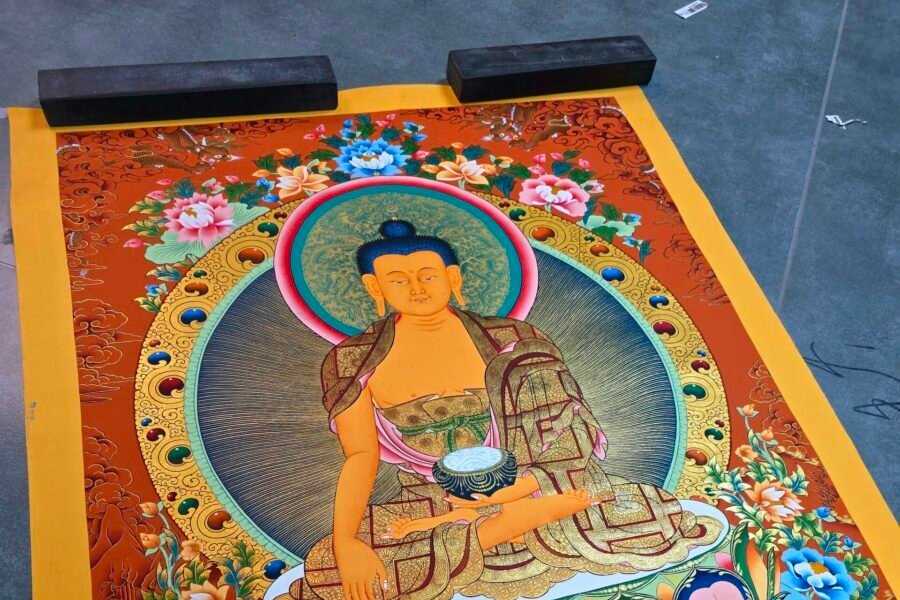
Shakyamuni Buddha, the historical founder of Buddhism, represents the ultimate state of awakening. In Thangka art, he is depicted seated on a lotus throne, with his right hand touching the earth in the “Bhumisparsha Mudra”—the gesture symbolizing the moment he overcame illusion and attained enlightenment under the Bodhi tree. His golden body signifies purity, wisdom, and the radiance of truth. The serene expression, elongated earlobes, and monastic robes reflect his renunciation of worldly attachments and his compassion for all beings. Symbolically, Shakyamuni embodies clarity of mind, moral discipline, and the courage to face inner obstacles. Practitioners meditate on his image to cultivate insight, reduce confusion, and strengthen emotional stability. In modern spaces, a Shakyamuni Thangka is ideal for study rooms, meditation corners, or any environment seeking calmness and clarity. Collectors value his Thangka for its universal meaning—regardless of one’s background, his teachings speak to the human search for truth.
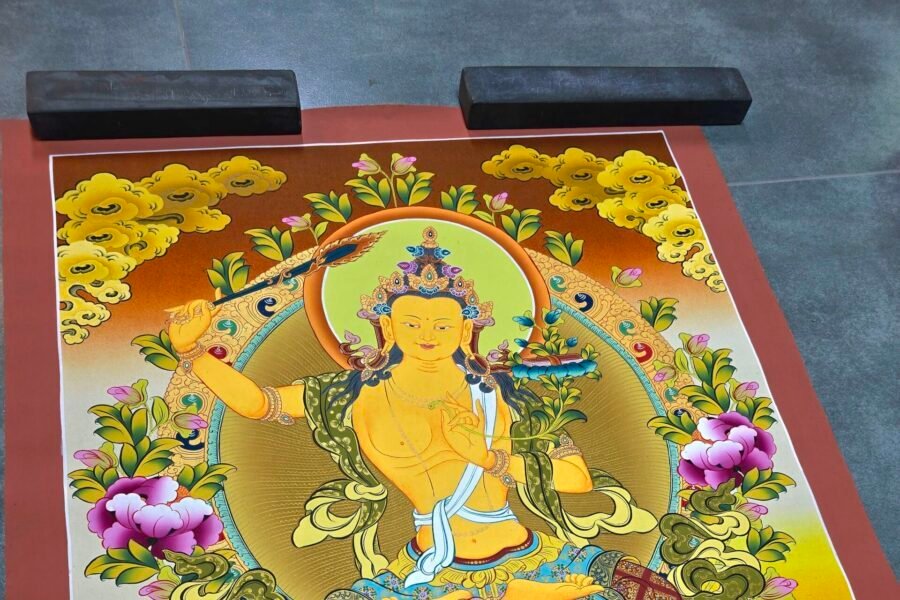
Manjushri — The Radiance of Wisdom
Manjushri is the embodiment of transcendent wisdom. His flaming sword cuts through ignorance, while the lotus supporting the Prajñā scripture symbolizes the ultimate truth of emptiness and insight. His youthful appearance reflects the freshness and clarity of awakened intelligence. In Thangka art, Manjushri is often surrounded by golden light, emphasizing the brilliance of wisdom. Practitioners invoke Manjushri to improve memory, sharpen thinking, and gain clarity in decision‑making. Students, scholars, and professionals often keep his Thangka in their study or workspace. Symbolically, Manjushri teaches that wisdom is not merely knowledge—it is the ability to see reality clearly, free from confusion and emotional distortion.
Vajrasattva — Purification and Inner Clarity
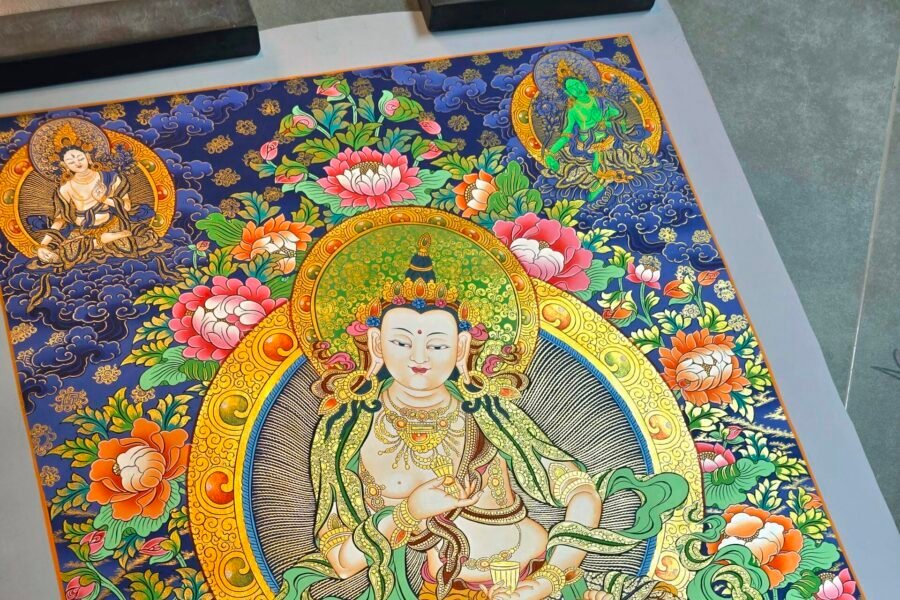
Vajrasattva represents purification of negative karma, emotional burdens, and mental obscurations. His white body symbolizes clarity and purity, while his vajra and bell represent method and wisdom—the two pillars of Buddhist practice. His mantra, the “Hundred‑Syllable Mantra,” is one of the most powerful purification practices in Vajrayana Buddhism. In Thangka art, Vajrasattva is depicted with serene expression, seated in perfect balance. The white radiance around him signifies the cleansing of emotional heaviness and the restoration of inner harmony. A Vajrasattva Thangka is ideal for meditation rooms, healing spaces, or for individuals seeking emotional release, forgiveness, and renewal.
Kalachakra Mandala — The Wheel of Time
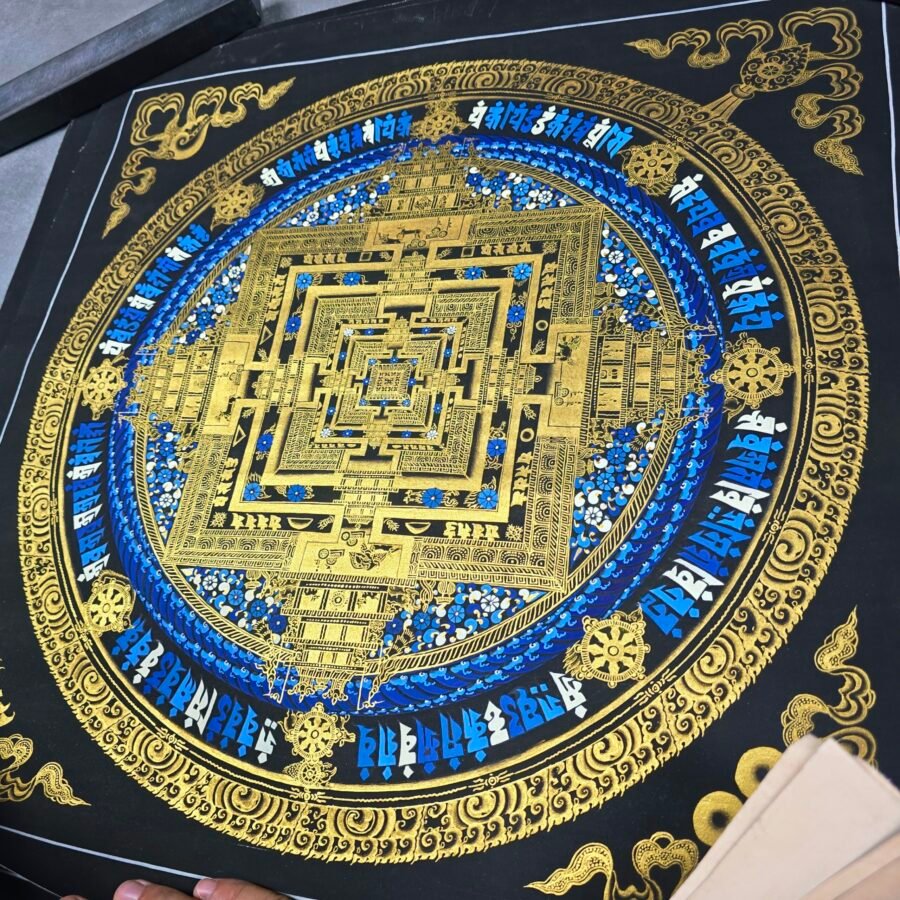
ENGLISH VERSION Kalachakra: The Mandala of Time and Cosmic Order The Kalachakra Mandala, known as the “Wheel of Time,” is one of the most profound and complex visual systems in Vajrayana Buddhism. It represents the structure of the universe, the nature of time, and the path toward inner transformation. Unlike deity-focused Thangkas, the Kalachakra Mandala is a complete cosmological map—an architectural diagram of enlightenment. A Universe in Perfect Geometry The mandala is composed of concentric layers, each representing a different dimension of reality: Every line, color, and symbol follows precise canonical rules. The symmetry is not decorative—it reflects the perfect balance of wisdom and method, form and emptiness. The Palace of Kalachakra At the center lies the palace of Kalachakra, a multi‑layered structure with gates facing the four directions. Each gate symbolizes a different aspect of awakening: Inside the palace resides Kalachakra (the deity) united with Vishvamata, representing the inseparable nature of wisdom and compassion. Surrounding them are hundreds of deities, each with specific roles in the cosmic order. Symbolism of Colors and Elements The mandala uses five primary colors—blue, white, red, yellow, and green—representing the five elements and five wisdoms. These colors are not merely aesthetic; they encode the energetic structure of the universe and the practitioner’s inner world. A Tool for Meditation and Protection Practitioners meditate on the Kalachakra Mandala to harmonize body and mind with cosmic rhythms. It is believed to bring: The Kalachakra initiation, often given by high lamas, is considered one of the most powerful blessings in Vajrayana Buddhism. A Masterpiece of Regong Art Regong masters spend months creating a single Kalachakra Mandala. The precision of geometry, the layering of mineral pigments, and the gold detailing require exceptional skill. Collectors value Kalachakra Mandalas for their spiritual depth and artistic complexity—they are not just paintings, but living diagrams of enlightenment.
Yellow Dzambhala — Prosperity, Stability, and Good Fortune
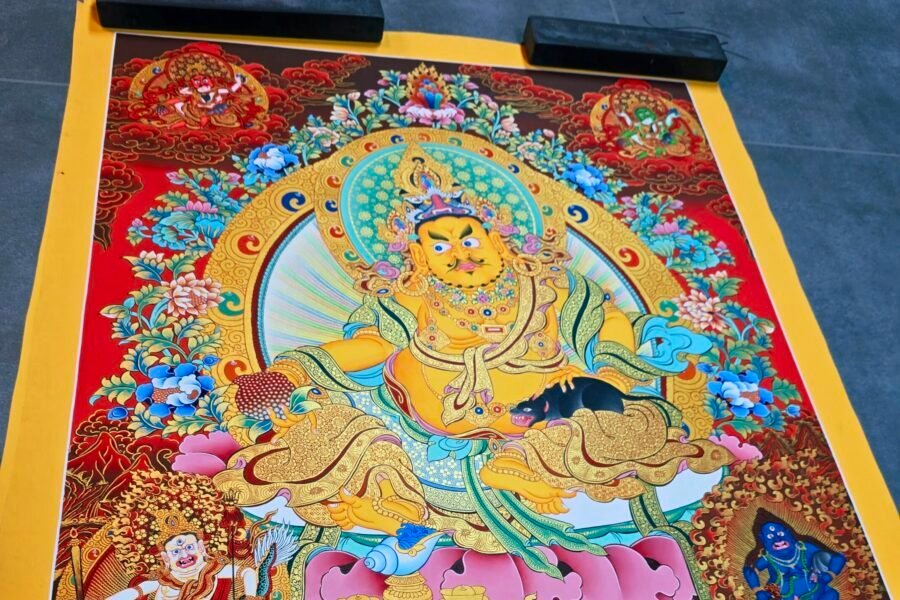
Yellow Dzambhala is the deity of prosperity—not sudden wealth, but stable resources, smooth opportunities, and supportive conditions. His golden body symbolizes abundance, while the treasure‑spouting mongoose represents generosity and the flow of blessings. In Thangka art, he is surrounded by jewels, lotus flowers, and auspicious symbols, emphasizing the theme of prosperity. Practitioners invoke Dzambhala to improve financial stability, career progress, and overall life momentum. His energy is warm, supportive, and uplifting. A Yellow Dzambhala Thangka is ideal for offices, studios, or homes seeking growth, stability, and positive energy.
Green Tara — Swift Compassion and Protection
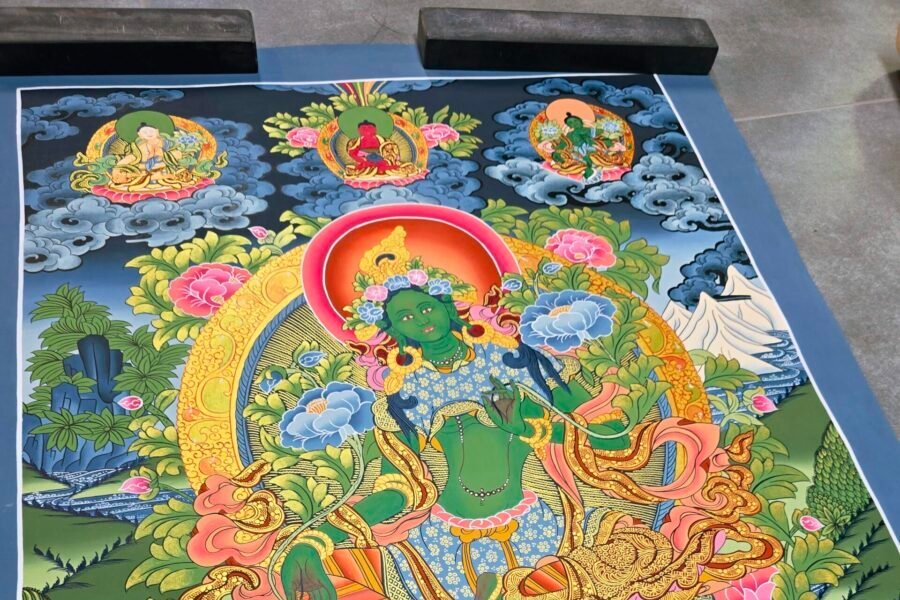
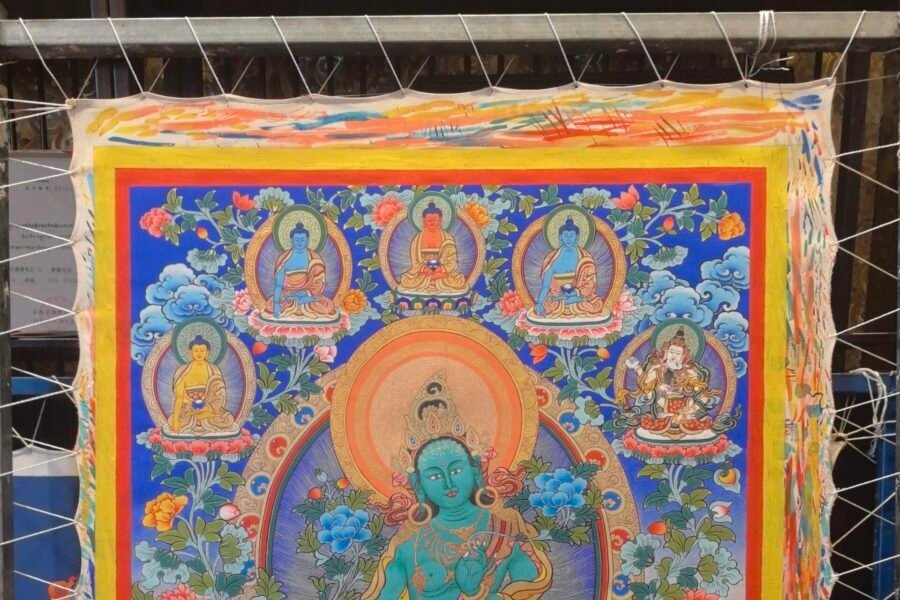
Green Tara is one of the most beloved female deities in Tibetan Buddhism. She embodies active compassion—the kind that responds instantly to suffering. Her right leg extends forward, symbolizing readiness to act, while her right hand forms the gesture of granting wishes. The lotus she holds represents purity and the unfolding of wisdom. Green Tara is known for removing obstacles, fears, and emotional turbulence. Her mantra “Om Tare Tuttare Ture Soha” is recited by practitioners seeking protection, clarity, and swift assistance. In Thangka art, her vibrant green body signifies vitality, movement, and enlightened activity. Surrounding her are smaller Taras, each representing a different aspect of compassionate action. A Green Tara Thangka is ideal for homes seeking harmony, for individuals facing uncertainty, or for anyone wishing to cultivate courage and emotional resilience. Her presence brings a sense of comfort and forward momentum.
How to Preserve a Thangka
Thangkas can last centuries if properly preserved.
How to Choose the Right Thangka
Choosing a Thangka involves intention, space, and symbolism.
How a Thangka Is Made: The Full Process
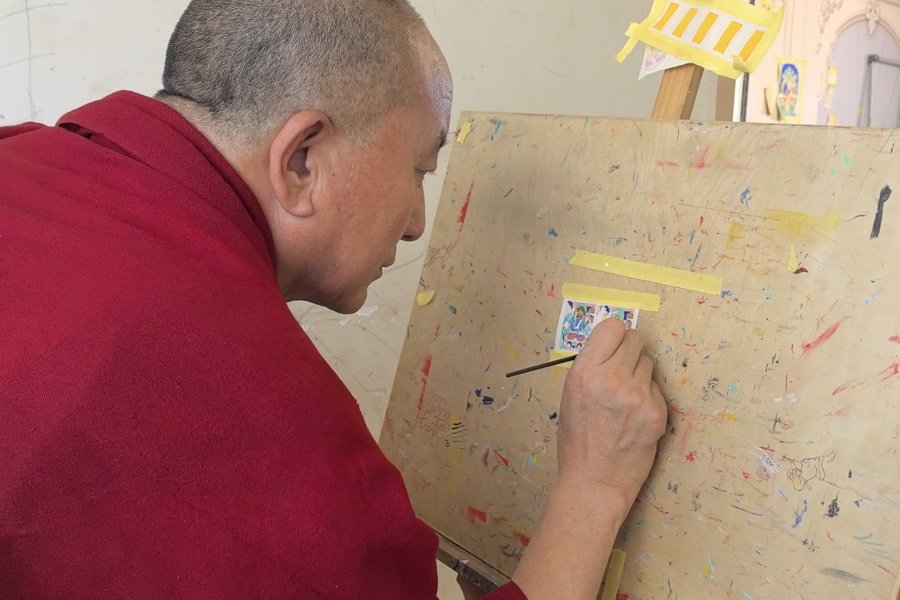
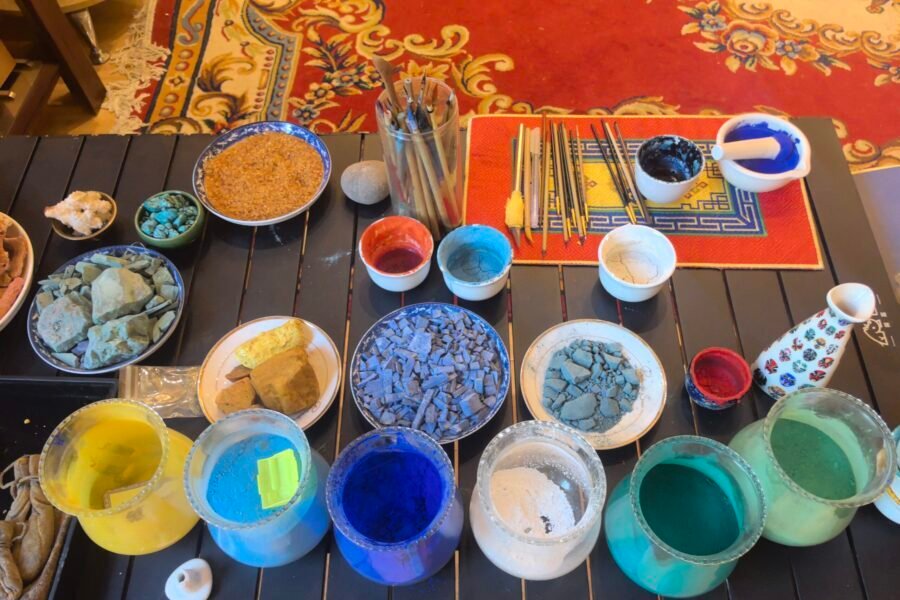
Creating a Thangka is a meditative and disciplined process.
The Meaning of Colors in Thangka Art
5555