Vajrasattva represents purification of negative karma, emotional burdens, and mental obscurations. His white body symbolizes clarity and purity, while his vajra and bell represent method and wisdom—the two pillars of Buddhist practice. His mantra, the “Hundred‑Syllable Mantra,” is one of the most powerful purification practices in Vajrayana Buddhism.
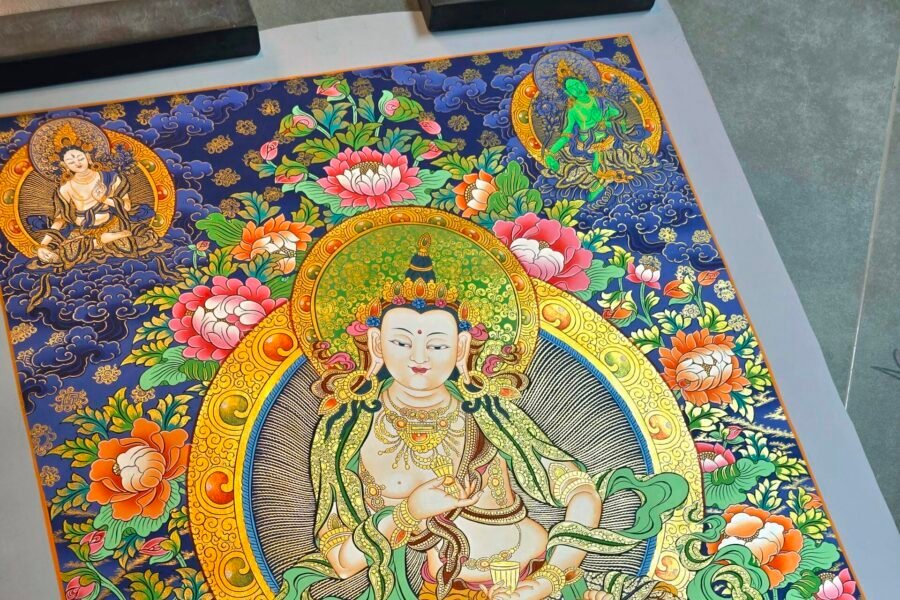
In Thangka art, Vajrasattva is depicted with serene expression, seated in perfect balance. The white radiance around him signifies the cleansing of emotional heaviness and the restoration of inner harmony. A Vajrasattva Thangka is ideal for meditation rooms, healing spaces, or for individuals seeking emotional release, forgiveness, and renewal.