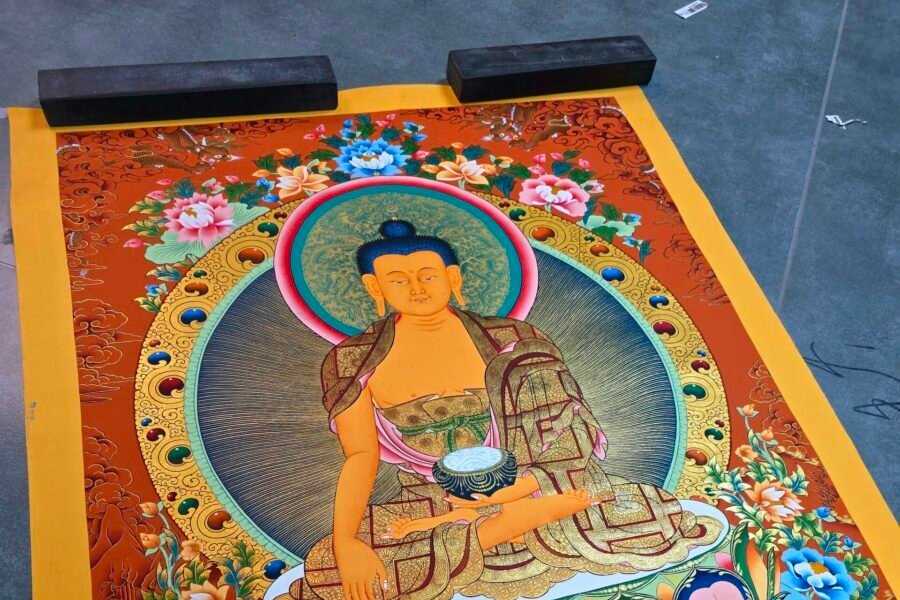
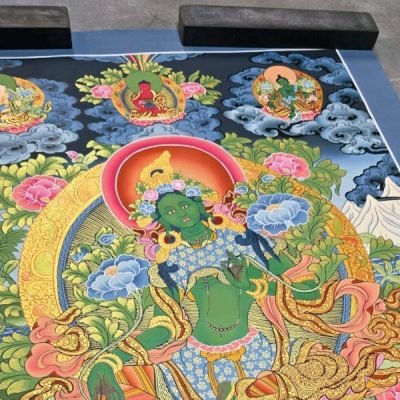
Shakyamuni Buddha, the historical founder of Buddhism, represents the ultimate state of awakening. In Thangka art, he is depicted seated on a lotus throne, with his right hand touching the earth in the “Bhumisparsha Mudra”—the gesture symbolizing the moment he overcame illusion and attained enlightenment under the Bodhi tree. His golden body signifies purity, wisdom, and the radiance of truth. The serene expression, elongated earlobes, and monastic robes reflect his renunciation of worldly attachments and his compassion for all beings.
Symbolically, Shakyamuni embodies clarity of mind, moral discipline, and the courage to face inner obstacles. Practitioners meditate on his image to cultivate insight, reduce confusion, and strengthen emotional stability. In modern spaces, a Shakyamuni Thangka is ideal for study rooms, meditation corners, or any environment seeking calmness and clarity. Collectors value his Thangka for its universal meaning—regardless of one’s background, his teachings speak to the human search for truth.